

Spinal Decompression in Tinley Park, IL: What to Expect and Who It Helps
That sharp, radiating pain shooting down your leg isn’t something you just “live with.” For millions of Americans dealing with a herniated disc, the fear of surgery — and the hope that something less invasive will actually work — drives their search for answers. If you’re in Tinley Park or anywhere in Cook County, you may have come across the term spinal decompression and wondered: what exactly is it, and could it help me?
This guide breaks it all down — the condition, the treatment, who qualifies, what a session actually feels like, and what the research says about outcomes.
What Is a Herniated Disc — and Why Does It Cause So Much Pain?
Your spine is made up of vertebrae stacked on top of each other, separated by soft, gel-filled discs that act as shock absorbers. When one of those discs is damaged — through injury, repetitive strain, or simple wear and tear — the inner gel can push through the outer layer. That’s a herniated disc.
According to the Mayo Clinic, most herniated discs occur in the lower back (lumbar spine) and can cause pain, numbness, or weakness in an arm or leg — depending on which nerve is being compressed. The good news they also note: many cases improve with conservative treatment within a few weeks to months.
The National Institute of Neurological Disorders and Stroke (NINDS) confirms that low back pain is the leading cause of disability worldwide, and herniated discs are among the most common culprits. An estimated 80% of adults will experience significant low back pain at some point in their lives.
When a herniated disc presses on a nearby nerve root, the result can range from a dull ache in your lower back to a burning, electric sensation running from your hip to your foot — what most people call sciatica. Left untreated or treated only with pain medication, the underlying problem doesn’t go away. The disc remains compressed. That’s where spinal decompression comes in.
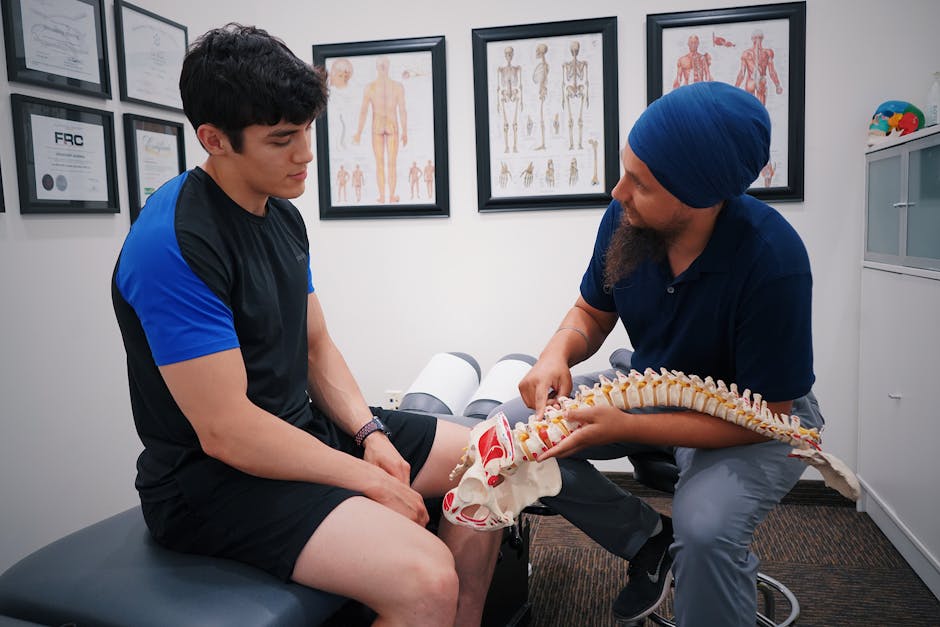
How Spinal Decompression Tinley Park IL Actually Works
Non-surgical spinal decompression is a motorized traction therapy designed to gently stretch the spine, creating negative pressure inside the disc. Think of it as “un-squishing” a compressed disc so it can heal from the inside out.
Here’s the mechanism, step by step:
- Gentle traction: A computerized decompression table applies slow, controlled pulling forces to the spine — carefully calibrated to your body weight, disc level, and condition severity.
- Negative intradiscal pressure: The traction creates a vacuum effect inside the disc, which draws the herniated or bulging material back toward its center and away from the nerve.
- Disc rehydration: That same negative pressure encourages oxygen, water, and nutrients to flow back into the disc — the raw materials it needs to repair itself.
- Nerve decompression: As the disc material retreats and the disc space opens up, pressure on the surrounding nerve roots decreases — which is what actually reduces pain, numbness, and tingling.
This is meaningfully different from simple traction. Standard traction applies a constant pull, which can trigger muscle guarding. Decompression equipment uses a logarithmic curve of force — varying the tension in a pattern that relaxes the muscles while still creating the therapeutic vacuum effect.
A study published in the Journal of Manipulative and Physiological Therapeutics found that non-surgical spinal decompression therapy produced significant reductions in pain for patients with lumbar disc herniation and degenerative disc disease — supporting what many patients in our Tinley Park clinic experience firsthand.
At Health on Earth Chiropractic, our non-surgical spinal decompression program in Tinley Park combines decompression therapy with chiropractic care and personalized rehabilitation to address the root cause — not just the symptom.
Who Is a Good Candidate — and Who Should Not Use This Therapy
Spinal decompression is not a one-size-fits-all treatment. A thorough evaluation is essential before starting any program. Here’s a straightforward breakdown of who tends to benefit most, and who should avoid this therapy.
| Condition / Factor | Good Candidate? | Notes |
|---|---|---|
| Lumbar disc herniation | ✅ Yes | One of the most common and well-studied applications |
| Degenerative disc disease | ✅ Yes | Disc rehydration benefit is especially relevant |
| Sciatica from disc compression | ✅ Yes | Nerve decompression directly addresses root cause |
| Facet syndrome / posterior joint pain | ✅ Often yes | Evaluated case by case |
| Acute vertebral fracture | ❌ No | Traction forces are contraindicated with unstable fractures |
| Severe osteoporosis | ❌ No | Bone fragility increases risk of injury under traction |
| Pregnancy | ❌ No | Not appropriate during pregnancy; other safe options available |
| Spinal fusion (hardware present) | ❌ Usually no | Surgical hardware can be disrupted by decompression forces |
| Spinal tumor or infection | ❌ No | Medical evaluation and clearance required first |
This is exactly why a proper exam and diagnostic review — including imaging if needed — comes before any treatment plan. Our team in Tinley Park reviews your full history before recommending decompression. Your safety is the starting point, not an afterthought.
If decompression isn’t right for you, that doesn’t mean you’re out of options. Our chiropractic care program in Tinley Park includes a range of non-surgical approaches tailored to your specific diagnosis. And for patients whose disc-related compression has led to nerve damage, our neuropathy treatment program may offer an additional or complementary path to relief.
What a Typical Decompression Session Looks and Feels Like
If you’ve never done this before, it’s completely normal to be a little anxious. Here’s what actually happens during a session at a clinic like ours.
You’ll lie fully clothed on a specialized motorized table. A harness is gently secured around your pelvis (for lumbar decompression) or your neck (for cervical decompression). The table is then programmed with the exact amount of tension — typically between 50 and 100 pounds of distraction force for lumbar cases, depending on your body weight and condition.
The machine cycles through periods of gentle pulling and brief relaxation over approximately 20 to 30 minutes. Most patients describe the sensation as a mild, comfortable stretch — nothing sharp, nothing jarring. Many fall asleep during the session. If you feel any increase in pain, the session stops immediately. You’re always in control.
After the table session, your provider may combine decompression with supplementary therapies — cold laser, electrical muscle stimulation, heat therapy, or targeted exercises — to reinforce the healing response and reduce muscle spasm around the treated area.
How Many Sessions to Expect — and What the Research Says About Outcomes
Spinal decompression is not a one-visit fix. Disc healing is a biological process that takes time. Most treatment protocols involve 12 to 20 sessions over 4 to 6 weeks, with some patients needing more based on the severity and chronicity of their condition.
The CDC reports that approximately 50 million American adults — about 20% of the U.S. adult population — experience chronic pain, with back and spine conditions among the most frequently cited causes. Chronic pain by definition means the condition has persisted, which often means the disc has been under stress for a long time. Healing that takes patience and consistency.
That said, many patients begin noticing meaningful pain reduction within the first 6 to 8 sessions. Outcomes research consistently points to improvements in pain scores, functional mobility, and quality of life for well-selected candidates — particularly those with contained disc herniations and discogenic sciatica.
The American Chiropractic Association recognizes chiropractors as important providers of non-surgical spine care — a designation that reflects decades of outcomes data showing that conservative, non-invasive approaches often perform as well or better than surgical intervention for appropriate candidates.
Surgery has its place — we’ll never suggest otherwise. But for the majority of herniated disc patients who are not facing neurological emergencies (like severe progressive weakness or loss of bladder/bowel control), the evidence strongly supports trying conservative care first. Spinal decompression is one of the most targeted, well-tolerated conservative options available today.
Why Tinley Park and Cook County Residents Choose Non-Surgical Care First
Living in the southwest suburbs of Chicago means you’re close to major medical centers — but it also means easy access to high-quality non-surgical care right here in Tinley Park. You don’t need to commute downtown or wait months for a surgical consult to start getting better.
At Health on Earth Chiropractic, we take a root-cause approach to spine health. That means we’re not just managing your pain — we’re working to understand why your disc herniated in the first place, what’s keeping it irritated, and what combination of therapies will give your body the best chance to heal.
Whether your pain started after a car accident, a workplace injury, or simply woke you up one morning with no clear trigger, our team is here to evaluate your situation without judgment and without pressure. We offer a range of services — from spinal decompression and chiropractic adjustments to functional medicine and weight loss coaching — because we understand that spine health doesn’t exist in isolation from your overall health.
If you’ve been told surgery is your only option, or if you’ve been managing your herniated disc pain with medication and hoping it goes away, we’d like to offer you a different conversation.
Ready to find out if spinal decompression in Tinley Park, IL is right for you? Book a new patient exam at Health on Earth Chiropractic today — call our Tinley Park office or schedule online. Our team will review your history, examine your spine, and give you a clear, honest picture of your options. No pressure. Just answers.